Added
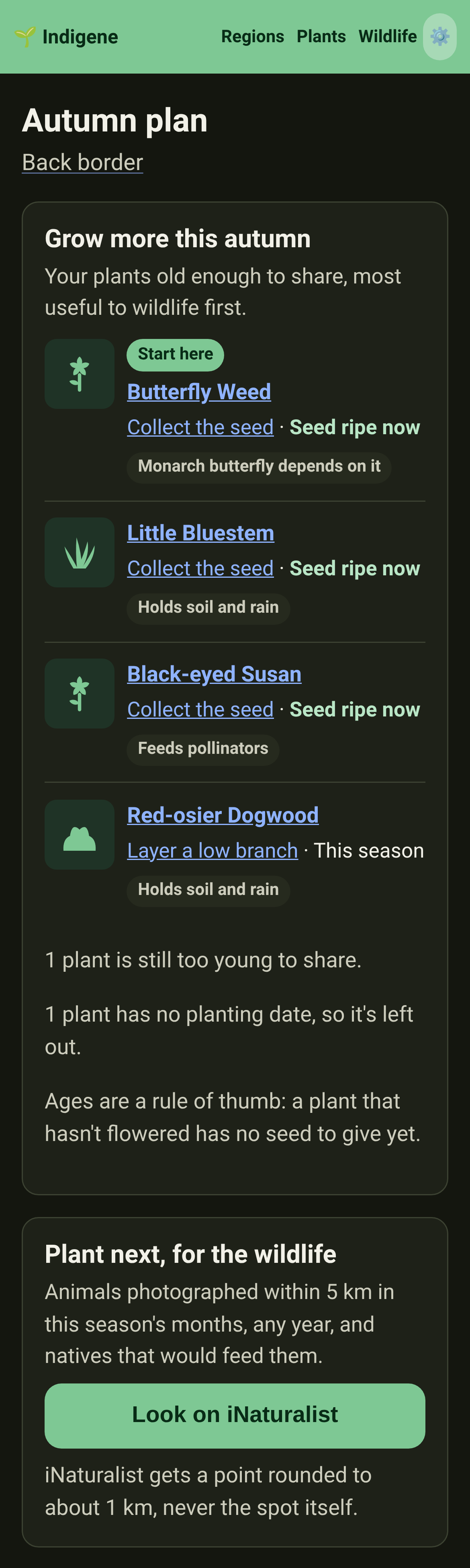
- A season plan for every saved spot. It picks the plants you've had long enough to share, says what to do now — collect ripe seed, divide a clump — and puts the ones wildlife needs most first, linked to the how-to.
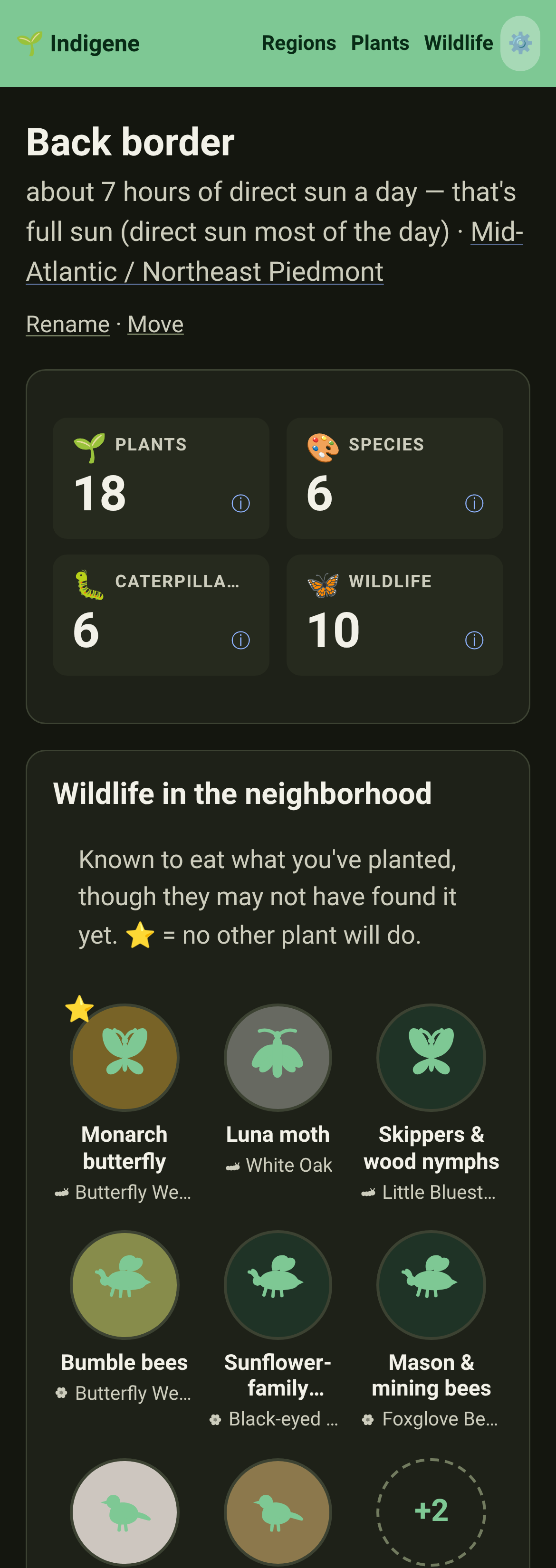
- Planting: the season plan can also suggest natives to add, for the animals photographed within 5 km of your spot this season. It asks iNaturalist when you tap to look, then remembers the answer for a month.
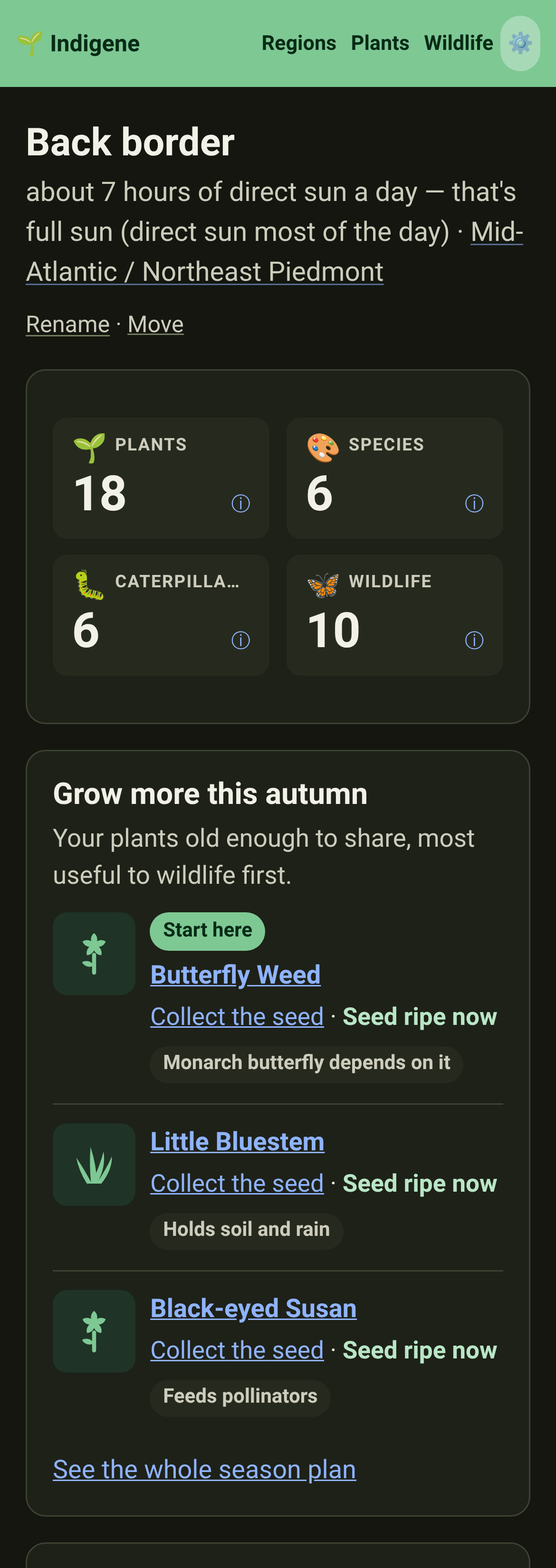
- Planting: your Saved spots open with the three most useful things to grow more of this season, across all of them.
- Backups: when a spot you bring in looks like one you already have (same name nearby, or the same patch of ground), you choose whether to combine them or keep both. Nothing comes in until you've chosen.
- Keeping your spots safe explains where your spots live, what can erase them, and how to save and restore a copy.
- If your browser speaks French but Indigene opened in English, a one-line offer at the top switches it: 🇫🇷 Lire en français. Close it and it never comes back.
Changed
- Backups: your spots file now holds everything — spots, plantings, linked sightings with their photos, your iNaturalist username and your settings. Open it in a new browser and it all comes back.
- Backups: bringing a copy into a browser that already has your spots adds what's new, like sightings linked on another device. Nothing already there is removed or overwritten.
- Backups: saved spots now ask the browser not to clear them when space runs low, and Settings shows when you last saved a copy. On iPhone, it explains Safari's one-week limit.
- Planting: the season plan now names its sources — the RHS, the USDA Woody Plant Seed Manual and Audubon — and each technique page links to further reading. Seed tasks on plants birds eat from say to leave some standing.
- Planting: trees and shrubs get seed reminders only once they reach the age their species first bears seed, from the USDA Woody Plant Seed Manual, and in the months its fruit ripens. White oak waits 20 years.
- Planting: every technique page was checked against published guides and corrected where they disagree — cold stratification takes one to six months, and semi-ripe cuttings go in a pot within half a day.
- Plants: propagation notes for France and Kantō now cite pages we opened and checked, instead of "nursery practice". Where a source disagreed, the note changed — European larch needs no chilling, ivy cuttings come from climbing shoots — and a few with nothing checkable say so.
- Matches: importing from iNaturalist now reaches back five years instead of one, and only brings in your sightings within 35 km of the spot. iNaturalist is sent the spot rounded to about 1 km, so blurred sightings still turn up.
- Links in What's new are words you can tap, like a region's name or "a new page", instead of a web address printed after the sentence.
- Pages now point to each other where it helps. A region opens its look-alikes and native swaps, a list of invasives ends with what to grow instead, and About links the settings it mentions.
- A plant search that finds no native now offers the invasive, look-alike or swap page for that name, so "butterfly bush" lands on the page that answers it.
- The guide has a page on the worst invasives: what makes a plant one, and how to use the lists to remove it.
- Links inside sentences are quieter: they keep the text's color with a soft underline, so a paragraph with links stays easy to read.
Fixed
- Choosing metric units in Settings is now remembered even when metric was already showing, so restoring a copy from an imperial device won't switch it.
- In French, some plants showed paragraphs written for another region's list: Ireland's oak was called the main tree of Atlantic France's forests. Each paragraph now shows only on its own region's list; elsewhere you'll see the English, marked as such.
- Every plant on the Kantō Plain now shows a real photograph from iNaturalist instead of the placeholder drawing.