Version 1.1
The Scottish Lowlands, a map of every region & guides to the app
October 17, 2026
Added
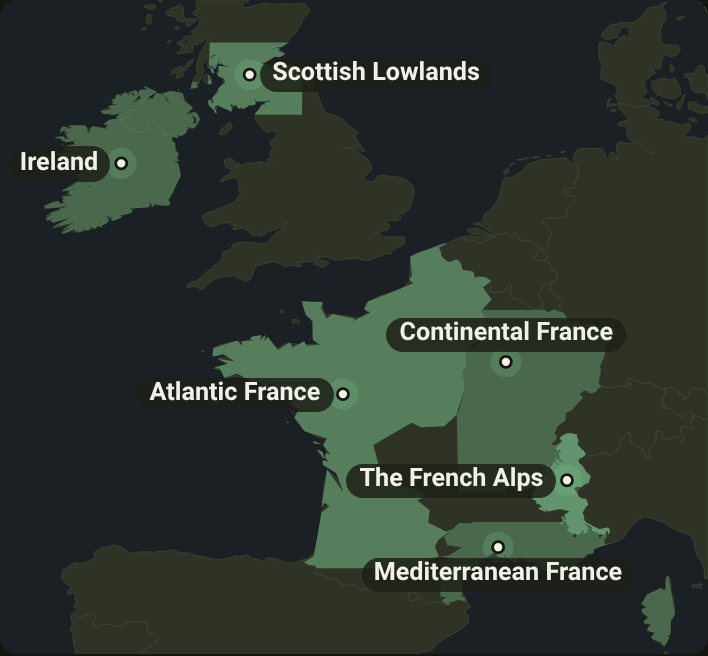
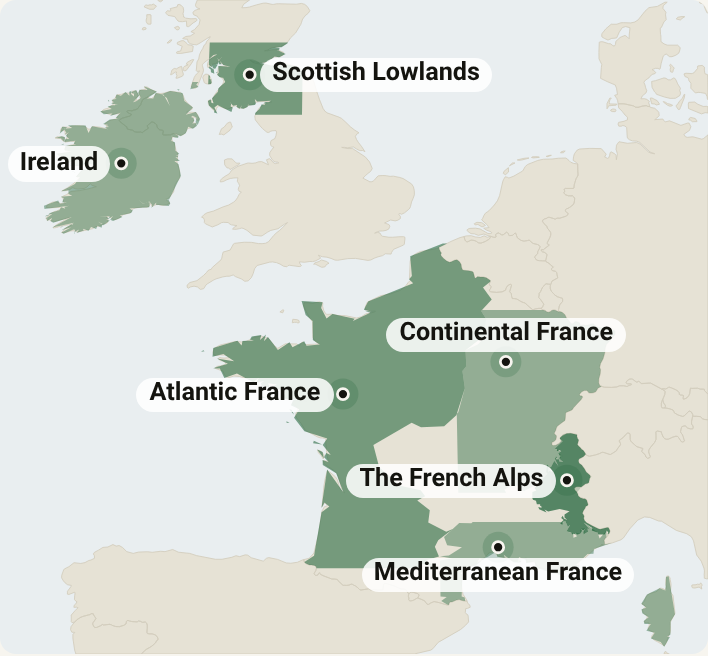
- The Scottish Lowlands are on the map: 59 native plants from Glasgow and Edinburgh to Dundee, Ayrshire and the Borders. Each one is checked as native in the region's own countryside, not just somewhere in Britain.
- Regions: Scottish plants carry their Gaelic or Scots names where people use them — caorann for rowan, gean for wild cherry, blaeberry for bilberry.
- Invasives: the Scottish Lowlands get their most-wanted list — NatureScot's priorities, like giant hogweed and Himalayan balsam, plus giant rhubarb and two butterburs spreading from old gardens.
- Ireland and the Scottish Lowlands now read in French, every plant and every note.
- A map of every region. The new map page shows the world in Equal Earth, every country at its true size, then a map per continent with each region named. Tap a name to open it.
- Plants that fed people first: for Indigenous Peoples' Day, five native plants and the peoples who ate, wove and tended them, from camas to hollyleaf cherry. It's Indigene's first post.
- Peoples and plants: the plant pages that say who tended each plant, and sources published by the nations themselves, from the Myaamia Center to Te Haumanu Taiao.
- The guide explains saved spots in full: logging what you plant, the wildlife your spot can feed, and its season plan.
- Ranking: a guide to how your plant list is ordered — the goals, the filters, and how each filter matches a label on a plant's page.
- Guides for a plant's page, growing more, linking iNaturalist, privacy and where the numbers come from. Each guide now ends with the guides that go well with it.
- Your plant list, the goals step, Saved spots and the iNaturalist setting each link to the guide that explains them.
- The Pacific Northwest has 12 more plants for lawns, rain gardens and shade: dune sedge as a lawn that rarely needs mowing, prairie bunchgrasses, lady fern, coastal wood fern, wild strawberry and bunchberry.
- Plants: in the Pacific Northwest, a plant's page now says whether the region's own botanists agree it's native — the Burke Museum's and OregonFlora's checklists — and names the one that disagrees, as on meadow checkermallow.
- North & Central Florida gets its first ferns, for wet shade where little else grows: cinnamon, southern shield, netted chain and swamp fern. Four grasses and two vines join them, including wiregrass and American wisteria.
- North & Central Florida gets fourteen more natives: the scrub and sandhill oaks, slash pine, sweetgum, elderberry, shiny blueberry, muscadine grape, pickerelweed for pond edges, and frogfruit, a lawn you can walk on that feeds butterflies.
- Invasives: Bohemian knotweed, English hawthorn, yellow flag iris and old man's beard each have a page on how to spot and remove them.
- Further reading for Chicago: John Hilty's Illinois Wildflowers, the site University of Illinois Extension sends gardeners to for photos and range maps of Illinois plants.
- 201 plants and animals that showed only their Latin name to French readers now have the French name the national reference lists give them, from Érable à sucre to Sittelle à tête brune.
- Matches: a row of plant-type icons (trees, shrubs, flowers, grasses…) now sits under the name search on your plant list. Tap one to leave that type out, like trees when there's no room for one.
- Plants: show one plant type alone. Hold Shift and click a type square, or long-press it on a phone. Do it again on that type to show everything except it.
- Plants: the Bloom tile on every plant page now shows the flower's colour as a small dot beside the word, two halves for a two-tone flower. The drawing of the plant growing uses the same colour.
- Further reading, What's new, the Guide, Privacy, Sources, About, the Native page and Homegrown National Park each open with a small drawing: a stack of books, a fern unrolling, a signpost, a latched garden gate, and more.
Changed
- Plants: the "Near the vegetables" line is off every plant page. It said the same thing on all of them, so it lives once, as the Natives & crops card on the Plants index.
- The page on what building Indigene cost now counts text read and text written separately, and includes every session up to October 12: 8.5 billion tokens read, 23 million written.
- Regions: Calscape now opens the further reading for both California regions, with a line on why: every California native by address, with the nurseries that stock it, and a garden planner.
- Matches: the soil and climate step shows each fact with an icon (❄️ winter, 🌧️ rain, ⛰️ slope), and dry, evenly moist and wet each get a drawn drop. The one-minute soil check moved to the guide.
- Ranking: each goal has its own icon, on the goals step and at the top of your plant list. The leading three show as a gold, silver and bronze podium.
- Ranking: your plant list stops at the plants that suit your spot, 25 at a time with "Show the next 25". Poor matches stay out unless you type their name.
- Ranking: plant cards show size, flowering months and wildlife value as small chips. Tap or hover a label like Essential to see what it means.
- Regions: your spot's ecoregion and hardiness zone show as small tags. Tapping one opens a guide on what they are and where the numbers come from.
- Plants: Kew's check on a plant's native status shows a green tick or a caution mark, and a small clock tag with the date that opens what the check means. "Where it's native" is now "Habitat", which is what it describes.
- Matches: steps you've finished are links, so tapping "Sun" takes you back to change it.
- Plants: "How to grow more" gives each method room to breathe, and a plant's identity code has a copy button.
- Many short texts across the app are shorter, and none use long dashes any more.
- Ranking: your plant list opens with your spot's sun, soil and winter, using the same icons as before, then two rows you tap anywhere: your goal, and filters that say what they cover. The totals show as two figures.
- Shorter words in a few places: "📍 Pacific Northwest · your pick", one quiet link for how your iNaturalist username is handled, and a one-line note on counting visits.
- Each guide shows only its latest changes. The full history has its own page, so the explanation comes first.
- Indigene's title and share picture now say "native plants for where you stand", shorter and the same everywhere a link to it appears.
- The Pacific Northwest's worst invasives now go ten deep, ranked by how much harm Washington's ecologists found each one does to wild habitat. Scotch broom, herb-robert and English ivy follow until those ecologists rate them.
- The location page is shorter and plainer: it says why your spot matters, then how to set the pin.
- Every plant's "native here" is now re-asked of Kew's world checklist four times a year, for all seventeen regions, and of Canada's own plant database for the two lists that cross the border. The date on each plant page moves with it.
- Peoples and plants opens with a drawing of a basket of camas and wild leek, and shows each plant with its photo. Sources and posts read like the reading list.
- The Indigenous Peoples' Day post shows each plant's photo, and every people it names links to their own nation's site or a list of their nations.
- Plants: what a tough plant puts up with (trampling, rubble, cracks, no watering) now has its own Resilience card beside Growing needs, instead of a line that ran off the edge of the plant's header. Wild thyme shows it.
- The town and postal-code search on the location page now sits right under "Use my location", instead of behind a link. No GPS needed to find your spot.
- A link ending in
?lang=fror?lang=ennow opens in that language even if you've picked another one. A line at the top offers your own language back, and your settings stay as they were. - Posts write their date the common way in English, "October 12, 2026", and keep "12 octobre 2026" in French.
Fixed
- The wild leek page now says what the Myaamia Center says — šikaakwa, written "Chicago" by the French, names both the wild leek and the striped skunk.
- Regions: the shading on the French maps stays in France. Atlantic France's map no longer runs along England's south coast, nor into Belgium or Spain.
- Ranking: the goal and filter rows no longer stay pinned over the plant list as you scroll, and they sit together in one quieter box, so the plants stand out.
- The home page's "More to explore" rows are tidy cards again, picture beside words, on phones and laptops alike. Plant pages' "native here" evidence notes get their styling back too.
- Every plant page that says "Kew confirms it" now has a check behind it. Fifteen Florida and twenty-one Pacific Northwest plants had been added after their region was checked; all have now been re-asked, and came back native.
- St Lawrence plants are now checked against Kew's world checklist too, as every other region is. Three of its plants Kew records under another name, and their pages say so.
- Plants: the Kantō Aristolochia page said 4 moths feed on it from field records; the field-only figure is 3, and the page now says both.
- Plants: the Soil pH tile now calls a range like 4.5–6.5 "acidic" instead of "around neutral", and 7.0–8.5 "alkaline". Eastern hemlock is one of the plants that now read right.
- The guide no longer says your location never leaves your phone. It goes straight to the public map, soil and weather services, and never to us.
- Spots: a saved spot now remembers how wet you said it stays. Before, reopening it went back to the soil map's guess, so a spot you called wet was ranked as evenly moist.
- Short messages like "Saved to this device." now slide in from the top of the screen, like your phone's own notifications, instead of a narrow bubble at the bottom. Tap one to dismiss it.
- Plants: karaka's page now says Māori planted it for its kernels, which are food only after long cooking and soaking, not for its fruit. Harakeke is the main plant of Māori weaving, not the only one.
- The loading screen shows its growing seedling again, instead of the stray word "main" above "Loading…".
- Tela Botanica, the second French name list, is checked again: the check had been asking it for a column its table doesn't have, and read the error it got back as "no name".
- The French names Indigene shows are checked against France's national reference list again. Its website had started turning scripts away, so the check now reads the same list from GBIF, where the Muséum publishes it.
- Seven French names now read as the reference list writes them: Thym serpolet, Genévrier oxycèdre, Doradille cétérac, Seslérie bleue, Argus frêle, Grosbec casse-noyaux and Vanesse des perlières.
- Matches: on a phone, holding a plant-type square to show only that type no longer selects it as text instead.
- Searching your town on the location page and pressing Next no longer sends you to Pittsburgh's plants. One match is used at once; with several, Next waits until you tap yours.
- Regions: a spot just outside a US region no longer gets its list when a map service we ask is down — it gets the same answer it would on a good day.